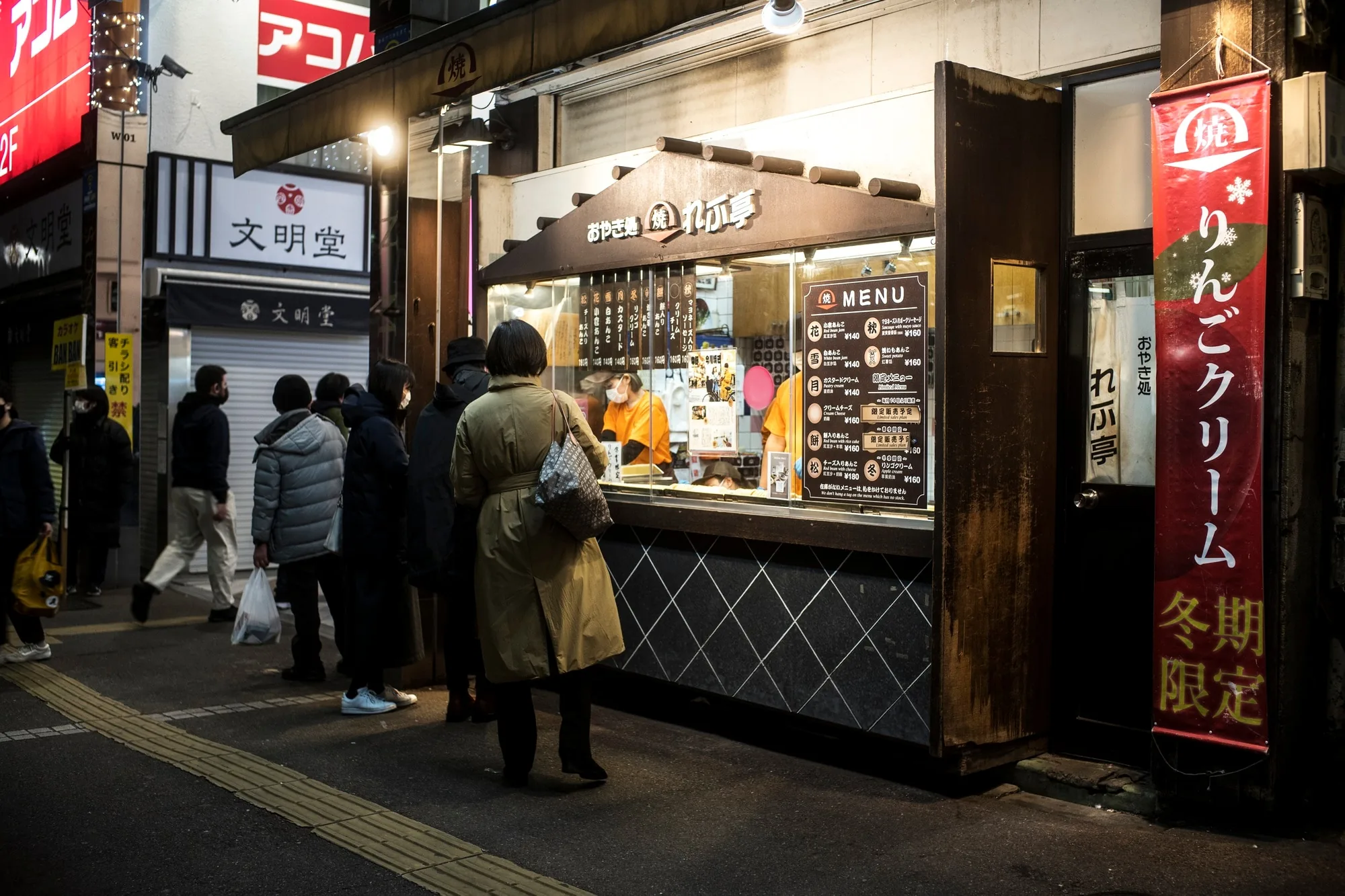
Hands-On Experience · Namba, Osaka
Make It Yourself.
Eat What You Made.
A half-day in a small kitchen, a cook at your elbow, and a handful of Osaka's most loved street snacks taking shape under your own hands — from raw ingredients to a plate you made yourself.
What this half-day leaves you with
The confidence to cook it again — anywhere in the world
Skills that travel with you
You'll leave knowing how the batter is mixed, how the heat is managed, when something is done and when it needs a moment more. That knowledge works in your kitchen at home just as well as it does here.
A shared morning or afternoon
Cooking alongside someone in a small kitchen changes the atmosphere. There's conversation, small discoveries, the particular satisfaction of doing something with your hands in good company. It's a better way to spend a few hours than most things on a travel itinerary.
A meal worth sitting down to
At the end of the session, you eat what you made. It's a small thing and a large thing at once — the most satisfying plate you'll have on the trip, because you put it together yourself.
Why street food is hard to bring home
You've eaten takoyaki in the alley. But making it at home felt like guesswork.
Most cooking videos skip the part where things go wrong — the batter that sticks, the heat that's slightly too high, the moment when you need to feel the dough rather than time it. The technique lives in the hands, not the instructions, and hands need someone beside them to learn properly.
Ingredients matter in ways that are hard to substitute from abroad. Knowing which flour, which stock, which grade of something makes the difference between a version that tastes right and one that tastes like a memory of the thing. That knowledge usually only comes from being in the kitchen with someone who uses it every day.
And there's a specific feeling — common to curious home cooks — of wanting to engage with food properly rather than just consume it. A trip to Osaka is a chance to close that gap. Most people come back with photographs of the alley. A few come back knowing how the food actually works.
What the Kitchen Half-Day is
A small kitchen, a patient cook, and your hands doing the work
The session runs for a half-day in a compact, well-equipped kitchen near Namba. A cook guides you through making two or three street snacks from scratch — prep, technique, plating. The group is kept small so everyone has real space at the counter and actual contact with the cook, not just a view from the back of the room. At the end, you sit down and eat what you made.
You do the cooking
This isn't a demonstration you watch from a stool. Your hands are in the batter, at the griddle, doing the folding and flipping. The cook is beside you — correcting, encouraging, showing — but the work is yours.
Real dishes, not simplified versions
The recipes are the actual ones — not adapted down for tourists. You'll make the real thing, with the real ingredients, at the real level of care. It's more achievable than it sounds, with a good cook beside you.
Paced for learning, not performance
There's no pressure to be impressive. If a step needs doing again, you do it again. If something needs explaining twice, it gets explained twice. The kitchen runs on curiosity, not speed.
The meal at the end
When the cooking is done, the table is set and you eat together. It's a proper close to the session — relaxed, warm, and full of the specific satisfaction that comes from eating something you made from scratch an hour ago.
What a half-day in the kitchen looks like
From apron to plate — the shape of the session
Arrival and setup
You arrive at the kitchen, borrow an apron, and meet the cook. The session starts with a brief look at the ingredients — what they are, where they come from, why this one and not another. Then the prep begins.
Prep — the part most people skip
Mixing batter, preparing fillings, understanding what consistency looks and feels like before it goes anywhere near heat. This is where a lot of home cooking goes wrong, and where the session spends its first unhurried stretch.
Cooking — at the griddle or the pan
The cook demonstrates once, then steps back while you try it. The feedback is immediate and specific — not just "good" or "try again" but exactly what to adjust and why. You'll make each dish at least once, often twice.
Plating and eating together
The finished dishes go onto the table. Everyone sits, the cook joins you, and you eat what you spent the morning making. No rush, no clearing up yet — just a proper shared meal before the session closes.
What you're investing in
¥14,800 per person
A half-day of hands-on cooking with a local cook, all ingredients provided, and a full meal at the end. What you take home — the technique, the confidence, the memory of making something real — has a longer shelf life than most souvenirs.
Everything included in your half-day
- Half-day session in a small, well-equipped kitchen near Namba
- All ingredients for two to three street snack dishes, sourced fresh
- An apron to borrow for the session
- Hands-on guidance from a local cook at every step — prep, cooking, and plating
- The dishes you make to eat at the end of the session together
- Small group limited to a few people so everyone has real counter space and the cook's attention
- Ingredient guidance — what to look for when shopping at home, and what can be substituted
Dietary requirements can often be accommodated with advance notice. Let us know when you write and we'll work through it with you before the session.
Why learning by doing works here
You remember what your hands learned long after you forget what you watched
A cook with real context
Your guide for the session isn't following a curriculum. They've been making these dishes in this city for years — they know the shortcuts that don't work, the details that matter, and how to explain the difference between the two in a way that sticks.
Small groups by design
The kitchen is kept to a few people deliberately — not as a selling point but because it's the only way the session actually works. A cook can't give proper attention to eight people at once. With a small group, every question gets answered at the griddle, not shouted across the room.
No prior cooking experience needed
These dishes were street food before they were anything else — made quickly, made simply, made by people who learned them the same way you're about to. The techniques are accessible. What the session adds is someone to correct your grip and tell you when the heat is right.
What changes after this
The next time you see takoyaki on a menu — at home, abroad, back in Osaka — you'll read it differently. You'll know what went into it and roughly how long it took. That changes the eating, quietly and permanently.
A realistic expectation
By the end of the half-day, you'll have made two or three dishes from scratch, eaten them, and understood enough about the technique to attempt them at home. That's the modest promise — and it's a more useful thing to take home than most.
Our commitment to your session
Come as a curious person. Leave as someone who can cook this.
If the session didn't leave you feeling like you actually learned something — if the pace was wrong, if the guidance was unclear, if something wasn't right at the counter — we want to hear about it. We care about what happens in the kitchen, and we stand behind it.
No obligation to commit
A message is just a conversation. If the dates or group size don't work, there's no pressure — we'll say so honestly and try to find a time that does.
Clear about what's involved
Before you book, we'll tell you exactly what you'll be making, how long the session runs, and what to bring or wear. No surprises at the door.
Dietary needs, honestly handled
Tell us in advance and we'll work through what's possible. Some adaptations are easy; others aren't. We'll always be straight with you about which is which.
How to get started
Three steps to the kitchen counter
Write to us
Use the contact form on the main page. Tell us you're interested in the Kitchen Half-Day, when you're in Osaka, and how many people are coming. A line or two is plenty.
We confirm the details
We'll reply within a day with available dates, the kitchen address, and what you'll be making. If something doesn't suit, we'll look for a solution together.
You arrive, the apron goes on
Come with a good appetite and comfortable clothes. Everything in the kitchen is waiting for you. The cook will take it from there.
The kitchen is small. The space fills up.
Send us a note and we'll find a slot that works. All we need to start is when you're in Osaka and how many of you are coming.
Send a Note →Other ways to spend time with us
The Kitchen Half-Day is one of three experiences at Shadow Strand Bridge. Each one is built around a different kind of closeness with the food.
Evening Street Food Tasting
A guided walk through Namba's food alleys, pausing at four or five counters for grilled skewers, savory pancakes, and a warm bowl to close the evening.
¥6,200 per person
Explore this experienceRamen and Broth Sitting
A relaxed ninety-minute seated session comparing regional broth styles side by side — tasting cups, conversation, and a full bowl to finish.
¥4,400 per person
Explore this experience